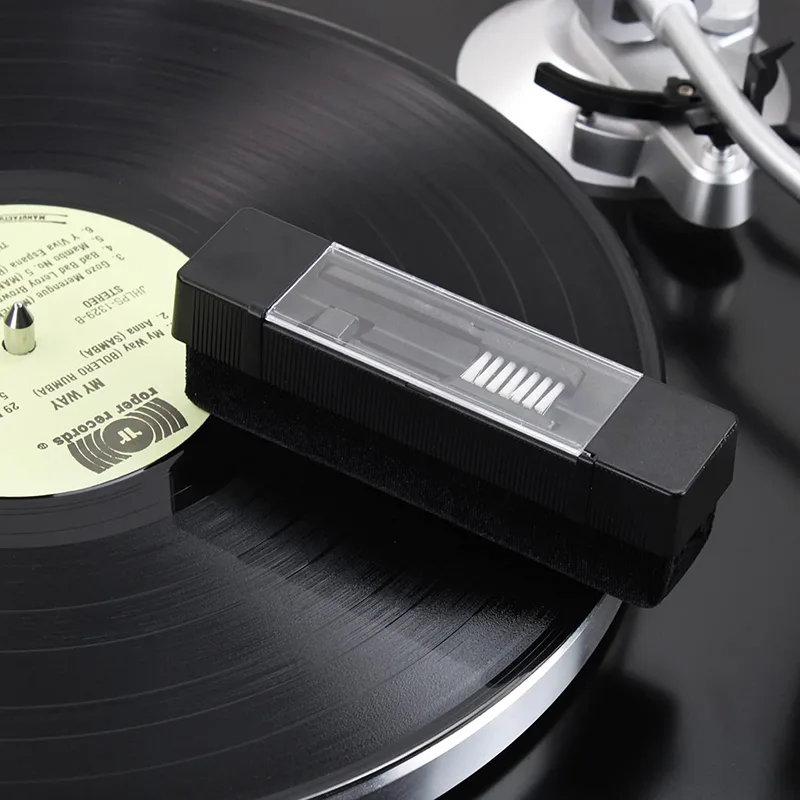
The Vinyl Record Cleaning Brush Set That Covers All Three Jobs
One anti-static velvet block for the record, one stylus brush for the cartridge, one nylon brush to keep the velvet clean.
🚨 Only a few left in stock
Three tools, three jobs, one small box
Most people buy a record brush after the same evening. You drop the needle on a record you have not played in months, and the first eight seconds sound like frying bacon. The music is fine underneath. What you are hearing is house dust that settled into the grooves while the sleeve sat on a shelf, and the stylus is now dragging through it at roughly two grams of tracking force.
That is a cleaning problem, not a damage problem, and it has a thirty-second solution. The catch is that a single brush only solves a third of it. Dust does not just live on the record. It builds a gray collar around the stylus tip, where it dampens high frequencies and makes a good cartridge sound tired. And the brush itself loads up: after a dozen sides, a velvet face that started matte black carries a visible line of lint that it simply moves from one record to the next.
This set exists because those three problems arrive together. You get the velvet block for the record, a stylus brush for the cartridge, and a stiff white nylon brush whose only purpose is to strip the velvet back to clean. It is a small, unglamorous box of tools, and it is the difference between cleaning your records and redistributing dust around your listening room.
Everything below describes exactly what is in the box, at the size it actually is, and exactly what a dry brush does to a record. If you want the full routine written out, our guide on how to clean vinyl records covers the wet steps too.
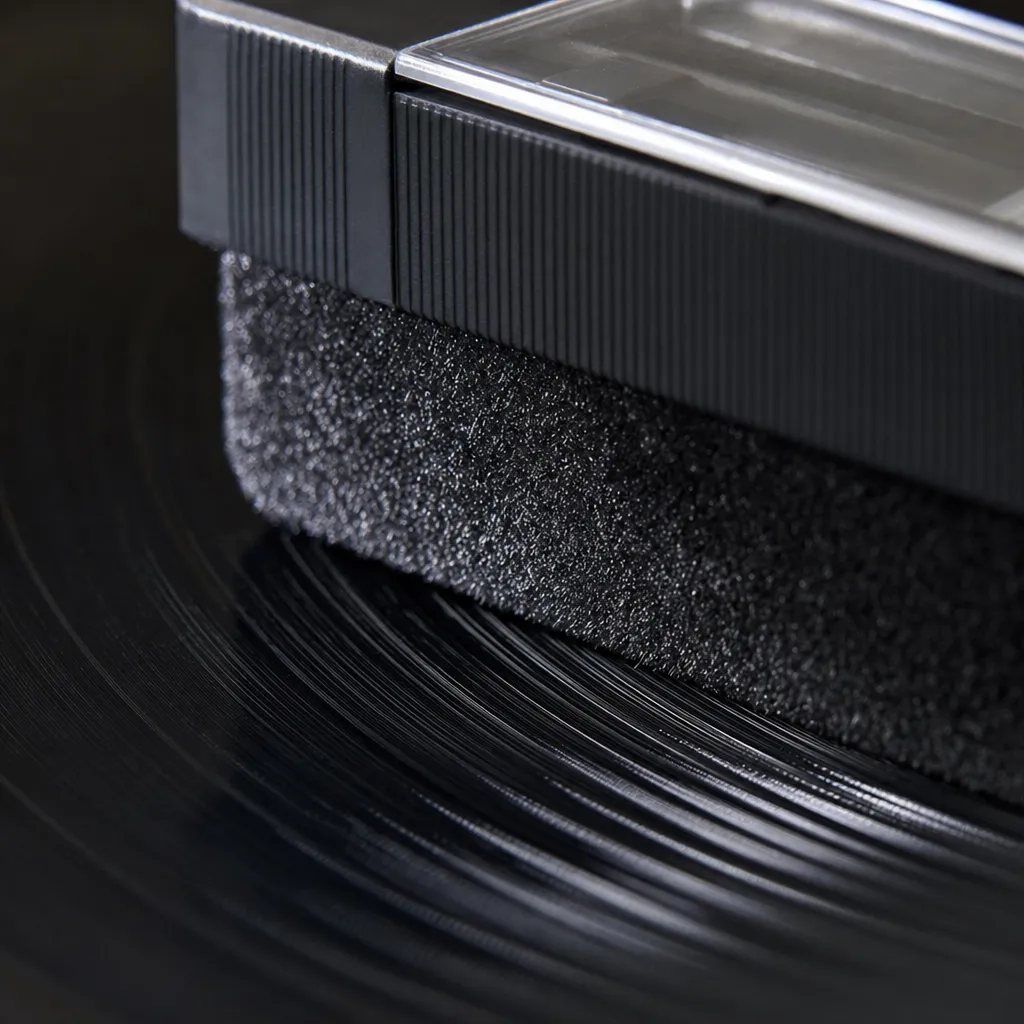
The velvet face is a pad, not a row of bristles
The velvet-faced block is firm on purpose, and that is what does the work. A soft brush skates across the surface and rolls dust into a ridge at the edge of the label; a firm pad keeps the velvet pressed flat against the vinyl for the whole sweep, so the dust lifts out of the groove in one pass. The bristles you are picturing are in the set too — the stylus brush and the nylon detail brush handle the needle and the edges.
The wide contact patch is the point. Velvet has a soft nap that traps loose particles by contact rather than by force, and because the face is flat and long, one slow pass covers the full radius of a side. Anti-static velvet also means the pad is not building up the charge that makes dust jump back onto the record two seconds after you lift the brush, which is the classic failure of wiping a record with a dry cotton cloth.
The body is black ABS plastic with finely ribbed end caps, so it holds still between your fingers even when your hands are dry. At 4.9 in (12.5 cm) it spans a comfortable part of the side without covering the label, and the whole set weighs almost nothing: the packed parcel is about 3 oz (85 g).
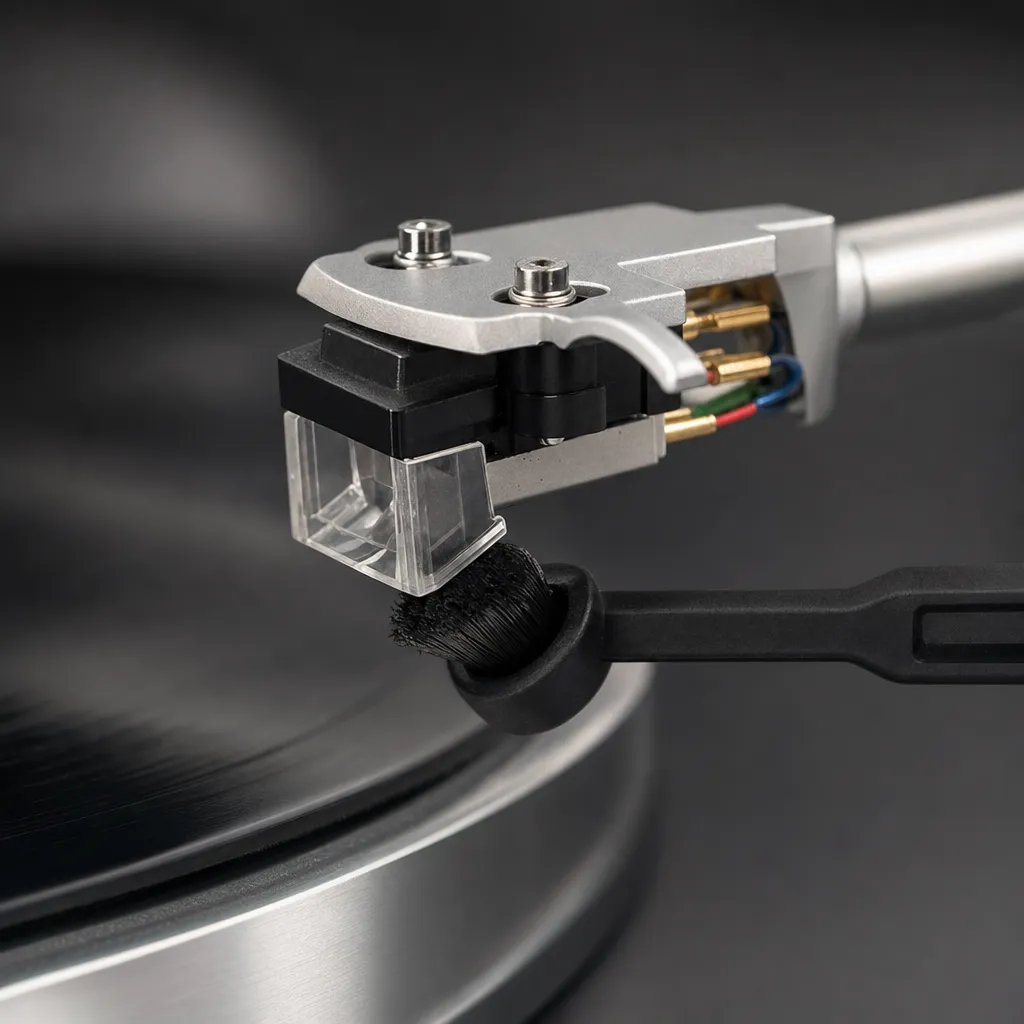
The stylus brush reaches the part you should never touch
A stylus tip is measured in microns and it is the most expensive fragile thing on your turntable. It also collects a felt of dust that you can only see under a light at the right angle. Once that felt forms, the tip stops reading the fine detail in the groove and the whole system sounds dull. Owners often blame the record, or the cartridge, or their ears.
Cleaning it is a five-second job with the right shape of tool. You sweep from the back of the cartridge toward the front, in the same direction the record travels under the stylus, three or four light strokes with no downward pressure. The bristle head is round and small enough to work under a headshell without fighting the cantilever. Sideways strokes are the one thing that genuinely damages a stylus, which is why the handle is angled: it makes the correct direction the comfortable one.
If you want the long version of that routine, with the mistakes worth avoiding, we wrote it out in our guide on how to clean a record player needle. The dedicated tool has its own page too, on stylus brushes.
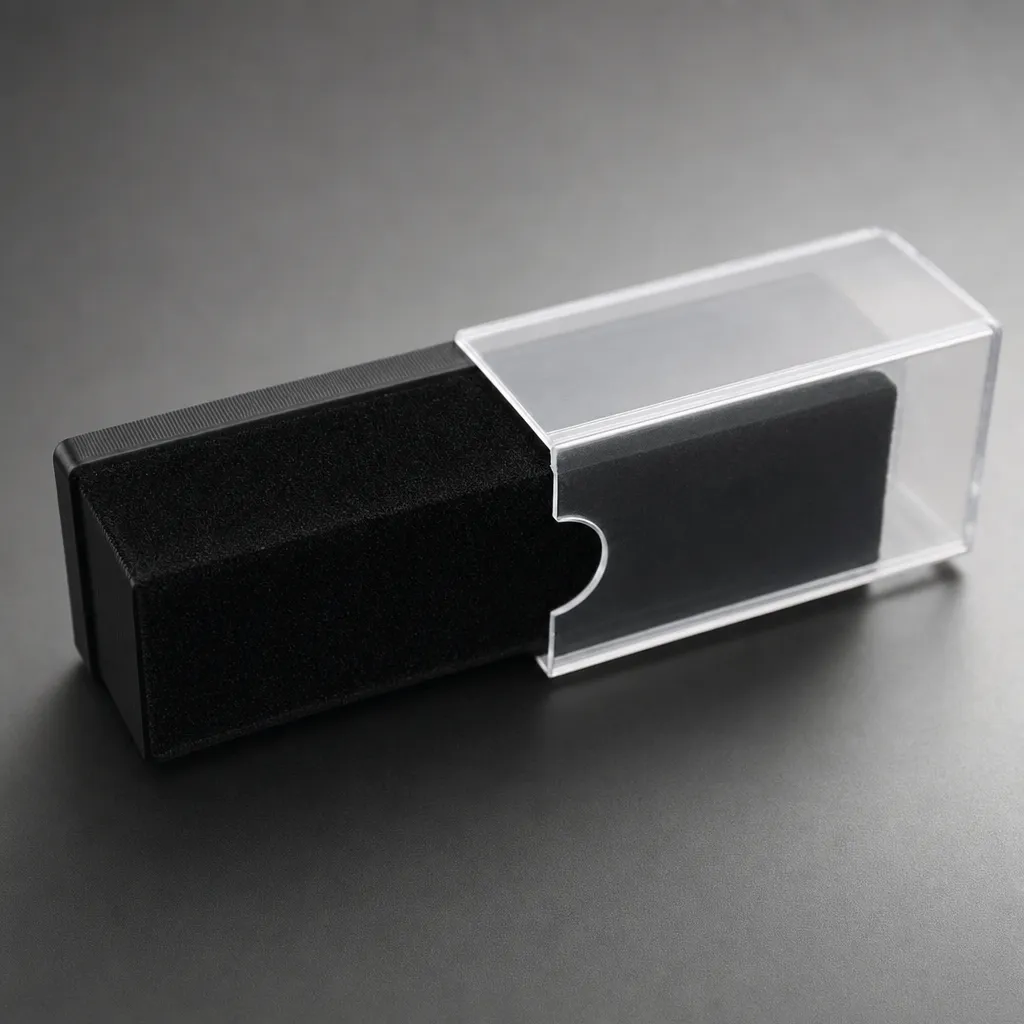
The sliding clear cover does two jobs at once
Every velvet record brush dies the same way. It sits face up on a shelf for three weeks, gathers a full load of the room, and the next time you use it you are painting a record with the dust of a fortnight. A cover is the cheapest possible fix and most brushes at this price do not include one.
Using it as a handle matters more than it sounds. Skin oil is the one contaminant a dry brush cannot remove, and the fastest way to get it onto a record is to touch the velvet with your fingertips and then run that velvet across the surface. Holding the clear cover keeps the whole exchange clean. The cover also stores flat against the block, and the back of the block houses the stylus brush, so the set travels as one piece rather than three loose parts in a drawer.
Storage habits are half of record care in general. If your collection lives leaning in a stack, brushing before every play is fighting a losing battle, and our guide on how to store vinyl records is the other half of the answer.
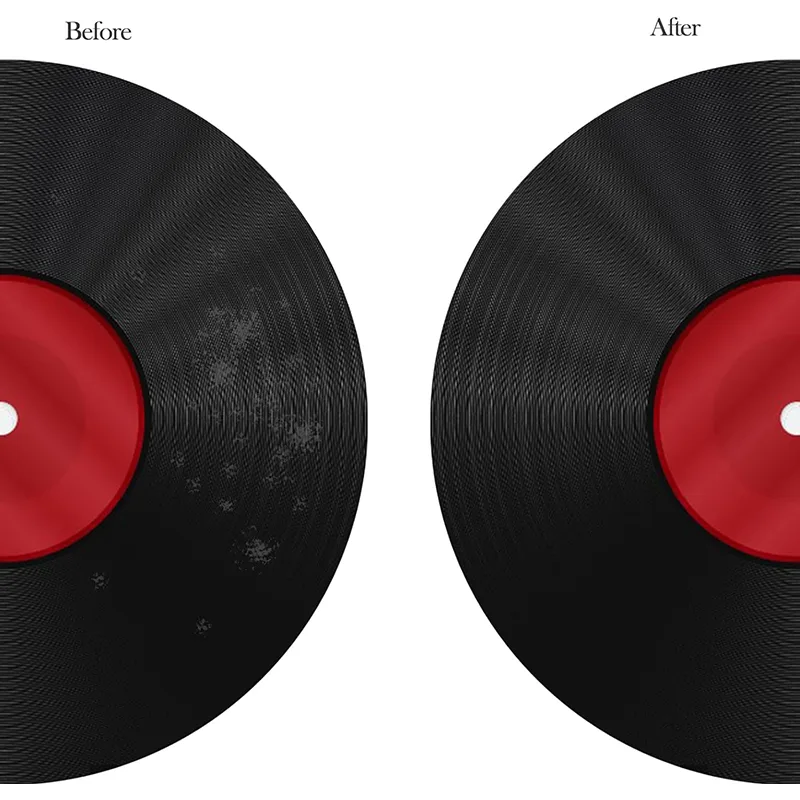
What one pass changes, and what it does not
We say this on the product page because it is the ceiling of the tool: a dry brush lifts dust and static before the needle reaches it, and that is the job it does every play. Nine of the forty-seven written reviews in the buyer feedback record mention dust removal working well. None of them claim it restored a damaged record, and neither do we.
Use it as maintenance rather than rescue. One slow pass before each side, one stylus sweep every few sides, one comb of the velvet when you see a gray line forming. Records that are brushed before every play stay clean for years, because the stylus is never grinding grit deeper into the groove wall in the first place. Records that are only cleaned when they start sounding bad are already past the point a brush can fix.
For anything worse than dust, wash the record properly and let it dry fully before it goes back in the sleeve. Our vinyl record care routine lays out the whole schedule, and the record cleaning kit page covers what a fuller kit adds on top of a brush.
What 47 buyers actually talked about, counted line by line
The listing this set comes from carries 151 ratings and an average of 4.6 out of 5. Fifty of those ratings came with written text, and two of them are keyboard mash, so we read the forty-seven real ones and tagged every theme a buyer raised without being asked. Nobody else publishes this count, and it includes the complaints. Here is the whole table.
| Theme raised spontaneously | Reviews | Share |
|---|---|---|
| Dust removal works | 9 | 19% |
| Matches the description | 6 | 13% |
| Fast delivery | 5 | 11% |
| Build quality | 5 | 11% |
| Value for money | 4 | 9% |
| It is a pad, not bristles | 4 | 9% |
| Slow delivery | 3 | 6% |
Source: our count across the 47 written buyer reviews, July 2026.
Two rows in that table are the reason this page reads the way it does. Four buyers arrived expecting bristles and found a velvet pad, so we describe the pad before we describe anything else. Three buyers found delivery slow, so we print the real window, 1-2 business days to process and 6-10 business days to arrive, instead of a vague promise. The other ninety percent of the file is unremarkable in the best way: it works, it looks like the photos, it costs what it should.
The rating itself deserves a word. It is 4.6 across 151 ratings, not a perfect five, and the low ratings are almost all from buyers who ordered the single-brush option and expected the full three-piece set. That is a listing problem rather than a product problem, and it is why every option on this page says exactly how many pieces you receive. You can read the full breakdown on our reviews page.
Vinyl is not a nostalgia trip anymore
If you are wondering whether it is worth keeping a cleaning routine for a format that was supposed to be dead, the trade numbers answer that better than we can.
U.S. vinyl revenue in 2025, the first time the format passed one billion dollars since 1983
vinyl units sold in the United States in 2025, more than three times the revenue of CDs
of consecutive growth for vinyl sales in the United States
Forty-six million records went home with somebody last year, and a large share of them are being played on turntables that live in ordinary rooms with ordinary dust. A brush is the least expensive part of that setup and it protects the two parts that are not: the records and the stylus.
"A velvet pad is not a brush and it will feel wrong for about a minute. Rest it flat, let the record turn under it, and pull outward. The dust ends up on the velvet instead of under your stylus, which is the entire job."Nick Talbot, Tonebrush test bench, July 2026
Written and reviewed by Nick Talbot, July 29, 2026. See how we test and who we are.
Everything about the set
Buying guide: how to choose a record brush
There are three families of record brush on the market and they are not interchangeable. Velvet pads, like the one in this set, present a wide flat face to the record and lift loose dust by contact. Carbon fiber brushes use rows of extremely fine conductive filaments that reach into the groove and drain static. Microfiber cloths and pads are the third family, and they are mostly useful as a drying step after a wet clean.
Pick velvet if you want a single tool for regular maintenance, if you want the widest possible contact patch per pass, and if you prefer something you can see clearly when it needs cleaning. A loaded velvet face is obvious at a glance, which is a real advantage: a carbon fiber brush hides its dust between filaments and people keep using it long after it has stopped picking anything up. Pick carbon fiber if your main complaint is static crackle rather than visible dust, and read our comparison of carbon fiber versus velvet record brushes before you commit either way.
The second decision is whether you want a single brush or a set. A single record brush covers the record and nothing else. If your stylus has never been cleaned, buying a record brush alone means the dust you sweep off the vinyl still gets picked up by a dirty tip. A set costs a few dollars more and closes that loop. This one adds the third piece almost nobody sells, the small white nylon brush that cleans the velvet itself.
The third decision is storage. Ask whether the brush comes with a cover. It sounds like a detail until you have owned an uncovered brush for a month and watched it turn gray on the shelf. The clear cover on this block slides over the velvet face when you are not using it, and doubles as the handle when you are.
Finally, be realistic about what any dry brush does. It is a maintenance tool for records that are already reasonably clean, used before every play, forever. It is not a restoration tool. If you are buying to rescue a box of records from a garage, budget for a wet clean first and use the brush to keep them clean afterward. Our page on the full vinyl record cleaning kit explains where the line sits, and the anti-static record brush page covers the static side of the problem specifically.
Full specifications
| Pieces in the set | 3: velvet block with sliding cover, stylus brush, detail brush |
| Velvet block, length | 4.9 in (12.5 cm) |
| Velvet block, width | 1.18 in (3 cm) |
| Velvet block, height | 1.57 in (4 cm) |
| Cleaning surface | Anti-static black velvet on the long faces |
| Cover | Transparent sliding cover, doubles as the handle |
| Stylus brush | 2.4 in (6 cm), flat angled handle, round head of black bristles |
| Detail brush | 2.4 in (6 cm), flat straight handle, white nylon bristles |
| Body material | Black ABS plastic |
| Compatibility | 33, 45 and 78 RPM records, and CDs |
| Parcel weight | 3 oz (85 g) |
| Rating | 4.6 / 5 across 151 verified ratings |
We list only what is documented and what we can measure from the product itself.
What is in the box
The set ships in a plain black card box with the three pieces held inside. There is nothing else to unpack, no fluid, no cloth, no instructions worth reading.
| 1 × | Anti-static velvet block, 4.9 in (12.5 cm), with its transparent sliding cover |
| 1 × | Stylus brush, 2.4 in (6 cm), angled handle, black bristles |
| 1 × | Detail brush, 2.4 in (6 cm), straight handle, white nylon bristles |
The back of the velvet block houses the stylus brush, so the two travel together and you are far less likely to lose the small one in a drawer. If you pick the two-set option, you get exactly twice that: one set for the main turntable and one for a second deck, a second room, or a friend who keeps borrowing yours.
Shipping is free on every order, processed in 1-2 business days and delivered in 6-10 business days, to 4 countries. The details are on our shipping page, and the 30-day money-back terms are on our refund page.
The rest of the cleaning question
Three pages that answer the questions this one leaves open.
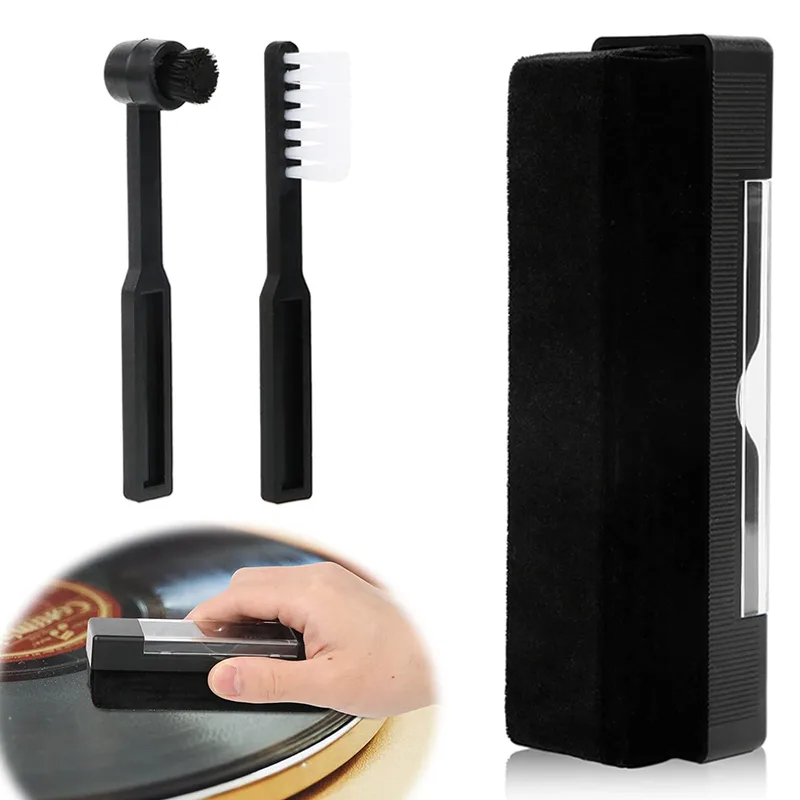
Record cleaning kit
What a full vinyl record cleaning kit adds on top of a brush, and when a dry tool stops being enough.
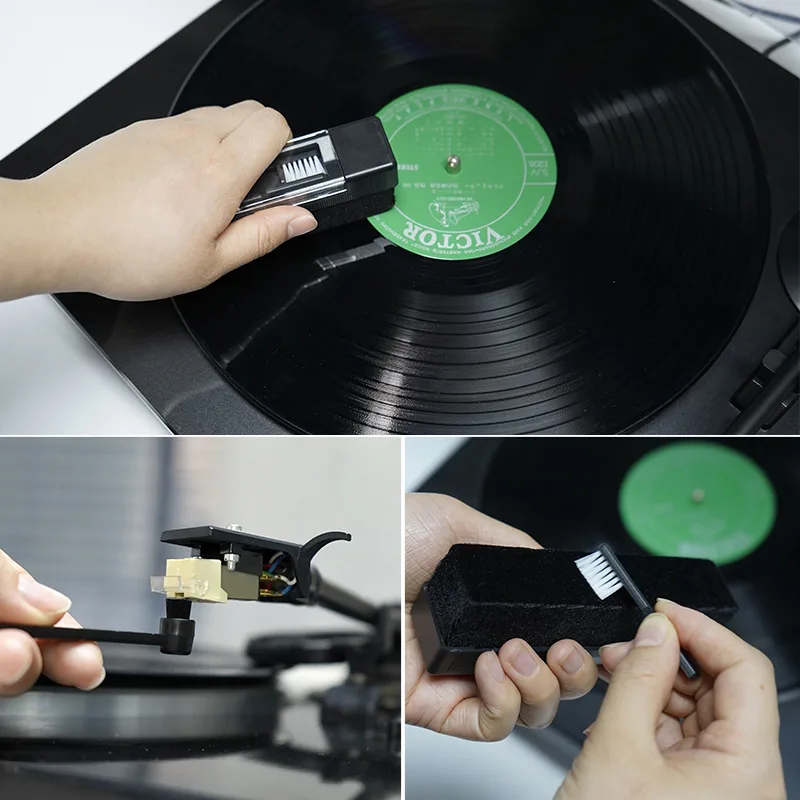
Anti-static record brush
Why static makes dust come straight back, and what anti-static velvet does about it.
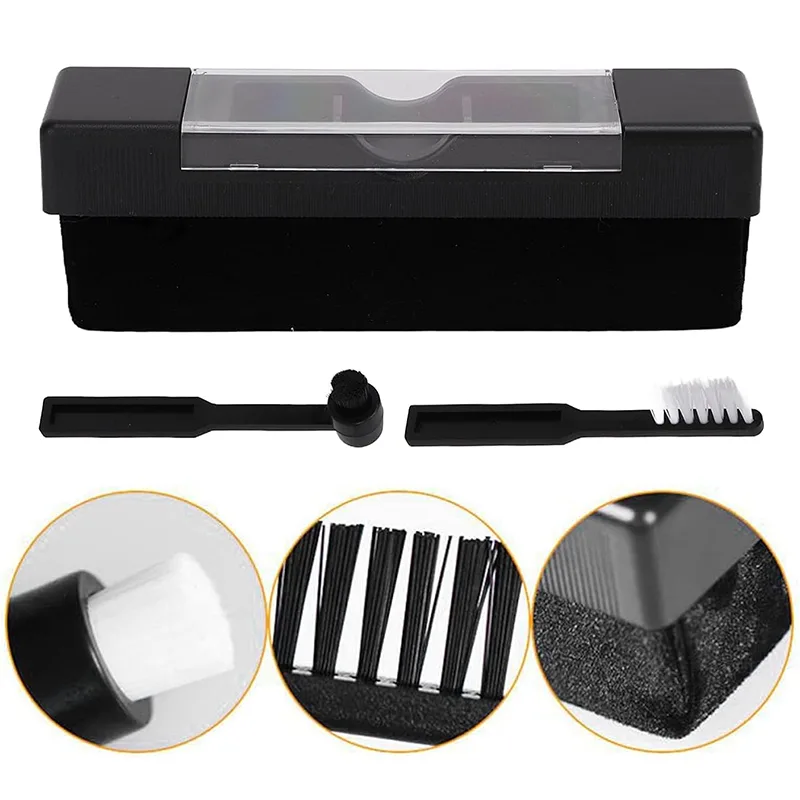
Stylus brush
The five-second habit that keeps a cartridge sounding like the one you paid for.
Rated 4.6 / 5 across 151 verified ratings
These three came with photos taken by the buyers themselves, printed word for word.
"Very good brush kit, it's of good quality ... to replace my old 30-year-old brush."
Verified buyer
"Conforms to the description in every respect, qualitative and easy to use."
Verified buyer
"Great product, as described, would reccomend"
Verified buyer
Verified reviews. All of them, including the low ratings, are on our reviews page.
Record brush questions, answered
What does a record cleaning brush actually do?
A record cleaning brush lifts loose dust and lint off the playing surface before the stylus reaches it. Dust sitting in a groove is what you hear as light crackle, and it is also what the stylus grinds deeper on every play. One slow pass before each side is the whole job. It does not repair a scratch and it does not replace a wet clean.
Is this a carbon fiber record brush?
No. This one is velvet. The large tool is a firm pad wrapped in anti-static black velvet, not a row of carbon fiber filaments. Both formats are common and they work differently: velvet wipes a wide contact patch, carbon fiber reaches with fine filaments. We compare them honestly in our guide on carbon fiber versus velvet record brushes.
Why does the big brush feel like a pad instead of bristles?
Because that is what it is, and it surprises some buyers. Four of the forty-seven written reviews in the buyer feedback record mention it. The block is firm foam and plastic dressed in velvet, so the whole velvet face touches the record at once instead of a few filament tips. It sweeps rather than digs.
How do you use the velvet block on a record?
Let the record spin on the platter. Rest the velvet face flat on the surface, keep it still for two or three rotations, then draw it slowly outward toward the edge and lift it away. Never scrub back and forth across the grooves. Wipe the collected dust off the velvet before you flip the record.
What is the small white brush for?
The white nylon brush is for the velvet, not for the record. After a few sides the velvet face holds a gray line of lint. You comb it out with the white brush, away from you, over a bin. Cleaning the cleaner is the step most people skip, and it is why a velvet brush stops working after a month.
Can I use the stylus brush on any cartridge?
The stylus brush has a small round head of soft black bristles on a flat angled handle, sized for a standard stylus tip. Sweep it from the back of the cartridge toward the front, in the direction the record travels, three or four light strokes. Never sideways, and never with pressure. Check your cartridge manual first.
Does it work on 78 RPM records and CDs?
The set is listed as compatible with 33, 45 and 78 RPM records and with CDs. The velvet face does not care about groove pitch, it lifts surface dust the same way on all of them. Shellac 78s are more fragile than vinyl, so use even less pressure and go slowly.
How fast does it ship, and what if I do not like it?
Orders are processed in 1-2 business days and delivered in 6-10 business days, with free shipping on every order. Every order is covered by a 30-day money-back guarantee: if the set is not what you expected, contact us within 30 days of delivery and we refund you.
Brush the record. Sweep the stylus. Comb the velvet.
The whole set starts from $29.95, with free shipping, delivery in 6-10 business days and a 30-day money-back guarantee.
🚨 Stock arrives in small batches and the current one is running low
Add to CartThe short version
A record cleaning brush is the cheapest insurance you can buy for a vinyl collection. Dust that stays in the groove gets pressed into the vinyl by the stylus, play after play, until light crackle becomes permanent surface noise. A single slow pass with an anti-static velvet record brush before each side removes the loose material that causes most of it, and it takes less time than cueing the tonearm.
This vinyl record cleaning brush set covers the whole loop rather than a third of it. The velvet block, 4.9 in (12.5 cm) long with anti-static velvet on its long faces, handles the record. The 2.4 in (6 cm) stylus brush with its angled handle and round black bristle head clears the cartridge tip that would otherwise pick everything back up. The 2.4 in (6 cm) white nylon detail brush combs the velvet clean when it loads up, which is the step that keeps the first tool working past its first month. A transparent sliding cover protects the velvet on the shelf and becomes the handle in your hand, and the set works on 33, 45 and 78 RPM records as well as on CDs.
It is not a carbon fiber brush and it is not a wet cleaner. It will not lift a fingerprint or rescue a record that spent a decade in a damp garage. What it does, it does for as long as you keep the velvet clean, and 151 verified ratings put it at 4.6 out of 5, with dust removal as the single most mentioned theme across the 47 written reviews we read.
Every order ships free, is processed in 1-2 business days and arrives in 6-10 business days, backed by a 30-day money-back guarantee. If you want the deeper reading first, start with how to clean vinyl records, then compare formats in carbon fiber versus velvet. If you already know what you need, the set is at the top of this page, from $29.95.